29th April 2023
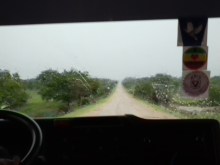
Sue and I woke at 5.30 am, with breakfast scheduled for 6 am and departure set for an hour later. However, the power wasn’t expected to return until 6 am, so we had to get ready in total darkness. Using a small torch, we managed to dress and make our way to the restaurant, only to find it completely deserted. Over the next 15 minutes, a few fellow group members appeared, followed eventually by one of the waiters. Remarkably, we were all fed and on the coach by 7 am.
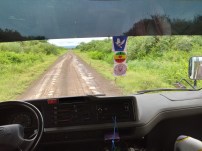
Today promised to be another long journey. The rain had begun during breakfast and persisted for most of the trip. We sat in the front seats just behind the driver, which gave us an excellent view of the road and every other road user until we reached the town of Jinka. The route was mostly dirt track, and in addition to the usual bone-jarring vibrations, the driver had to navigate pools of water of uncertain depth. I felt we were travelling at a pace that left little margin for error, and on more than one occasion, we skidded alarmingly close to the edge of the road and into its accompanying ditch.
Dik-dik
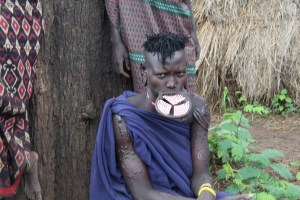
Upon arriving in Jinka, the rain finally ceased, and we enjoyed a large and delicious lunch in a busy restaurant situated on the town’s bustling main road. Afterwards, we left the highway and began a 65 km switchback journey, climbing up and over a mountain range en route to visit the Mursi Tribe, who inhabit the remote Mago National Park. The tribe is renowned for its distinctive body ornamentation, piercings, face painting, and lip plates.
Along the way, we encountered numerous small flocks of guinea fowl, easily recognised by their striking bright blue heads, and dozens of tiny dik-diks, which darted into the forest and undergrowth at our approach.
It is the Mursi women who are particularly distinctive. They insert large discs into their lower lips and decorate themselves with beads and elaborate headdresses. The men also bear decorative scarring, though not as extensively as the women. These raised scars are created through deep, self-inflicted cuts, undoubtedly a painful process.
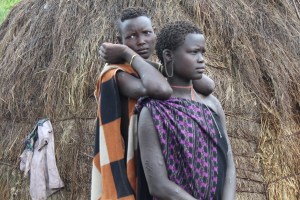
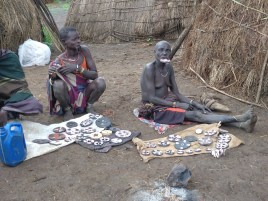
The tribes are nomadic and construct simple round dwellings with grass piled onto the roofs; comfort appears to be of little concern. They do not build separate compounds for individual families; instead, they live as one large, communal group.
As is often the case, we were greeted with warmth and enthusiasm, and a selection of handicrafts had been laid out in front of the huts in the hope of making a sale. We took photographs of individuals and family groups, then wandered between the dwellings, capturing further glimpses of their modest way of life.
I found them the strangest of all the tribes we had visited, not because of their appearance, but because of their aloofness. They were by far the most tourist-savvy, and although money didn’t seem to interest them (our guide paid them on our behalf for the photographs), there was a clear expectation that we should part with items we were wearing. I felt increasingly uncomfortable and was, in the end, quite relieved to leave.
 The journey back to Jinka was not without incident. We had crossed several streams on the outward leg, and on the return, one of them proved troublesome when we became stuck. After some revving, rocking, and a bit of pushing, we eventually got moving again, much to our relief.
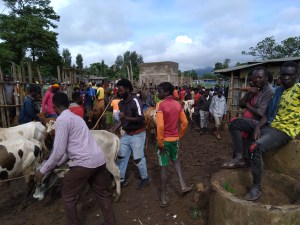
On the outskirts of the town, we came across the weekly bull market, held in a large field by the river, and decided to stop for a look. The earlier rain, combined with the constant trampling of hooves, had turned the field into a veritable mud bath. The auction was still in full swing, though we opted to keep our feet clean and watched from the entrance.
The trading system was fascinating. The farmers, many of whom are illiterate and unfamiliar with numbers, use a traditional bartering method: the buyer raises his hand, and the seller strikes it, each strike representing 100 birr. When the buyer reaches the amount he’s willing to pay, he lowers his hand. The seller then either accepts the offer or refuses the deal.
Our accommodation for the night was the Eco-Omo Lodge, located on the outskirts of Jinka. It was a very basic set-up, with tented lodges topped by mock thatched roofs. While they provided all the usual amenities, the electricity supply was intermittent. As with Buska, the power was cut between 10 pm and 6 am.
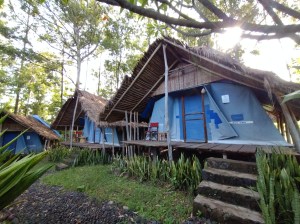
Our accommodation
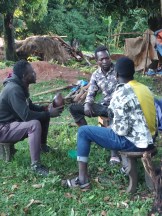
After checking in, some of us, accompanied by our guide, took a walk around the nearby village. Wherever we go, the locals seem fascinated by our presence and often tag along, curious to see what we’re doing. We visited several homes, including one that turned out to be the village pub, set in the garden of a hut where women brewed a rather weak and unappetising-looking beer, which they served in jugs to the men.
That evening, we enjoyed an excellent meal in the lodge’s restaurant. It was made all the more memorable by the huge number of termites swarming outside, many of which were drawn to the lights and found their way into the building.
We were all in bed before 10 pm.
30th April 2023
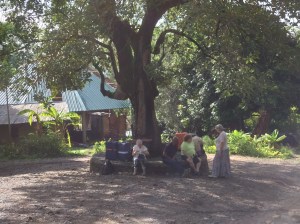
As already mentioned, we were in bed before the power went off. However, at 3 am, we were abruptly awoken by what we first assumed was the Muslim call to prayer, but it wasn’t. Instead, it was the local Christian churches, each one seemingly equipped with a powerful amplifier and speaker system, broadcasting their version of a call to prayer.
One church began, followed swiftly by another, and then another, until a full chorus of amplified voices echoed across the countryside. It was deafening, and sleep became impossible. Much like the Islamic tradition, the churches chanted sing-song verses from the Bible, but unlike the typically brief Muslim call to prayer, this continued relentlessly until 9 am. The actual Muslim call at 4 am was barely audible, lost in the cacophony.
With the noise still reverberating around the lodges, Sue and I joined the rest of the group for breakfast, most of whom had, like us, given up any hope of further sleep.
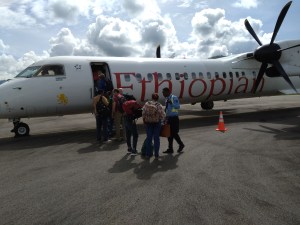
By 9 am, we were all packed and back on the coach for a short drive to Jinka Airport. It was a beautiful sunny morning, perfect weather for our flight back to Addis Ababa. After the usual ritual of disrobing and having our cases and holdalls thoroughly scanned, we boarded the plane for a short 20-minute hop to Bahir Dar. There, we remained on board for about half an hour while a few passengers disembarked and others joined, before continuing with a 50-minute flight to a rainy Addis Ababa.
For once, we collected our baggage and exited the airport without any additional scans or checks, an unexpected relief.
A 10-minute drive took us back to the Triple E Hotel and Spa, where we had stayed on our first night in Ethiopia. We soon checked in and sat down to lunch. While some members of the group opted to join a city tour, Sue and I chose to relax at the hotel, having already done the tour on our first day. Later, once the others had returned, we arranged a short shopping trip with our guide, which we thoroughly enjoyed.

During the afternoon, a wedding reception was taking place at the hotel, and Sue and I sat in the foyer, fascinated, as the wedding party and guests passed through on their way to the banqueting room. Everyone was dressed in white, including the bridesmaids and an equal number of best men, who were distinguished by orange and gold patterns on their outfits. We were told there were 160 guests in total, and later we could hear them celebrating on the top floor, accompanied by lively music, and a tremendous thunderstorm that chose to ‘crash’ the event in dramatic fashion.
That evening, we had dinner in the hotel restaurant with the Taiwanese-American couple from our group. They were leaving that night and, like us, had opted not to join the others who were dining elsewhere. We preferred a quiet evening and an early night in preparation for our journey home the following day.


Leave a comment